In autumn 2026, “The Doll” returns to screens—twice. On September 16, Paweł Maślona’s six-part series premieres on Netflix; two weeks later, on September 30, Maciej Kawalski’s star-studded blockbuster reaches cinemas. Two visions of the same novel, two casts, two views of Wokulski and Łęcka’s story. Did you know Prus wrote much of the novel in Nałęczów, just hundreds of metres from today’s Arche?
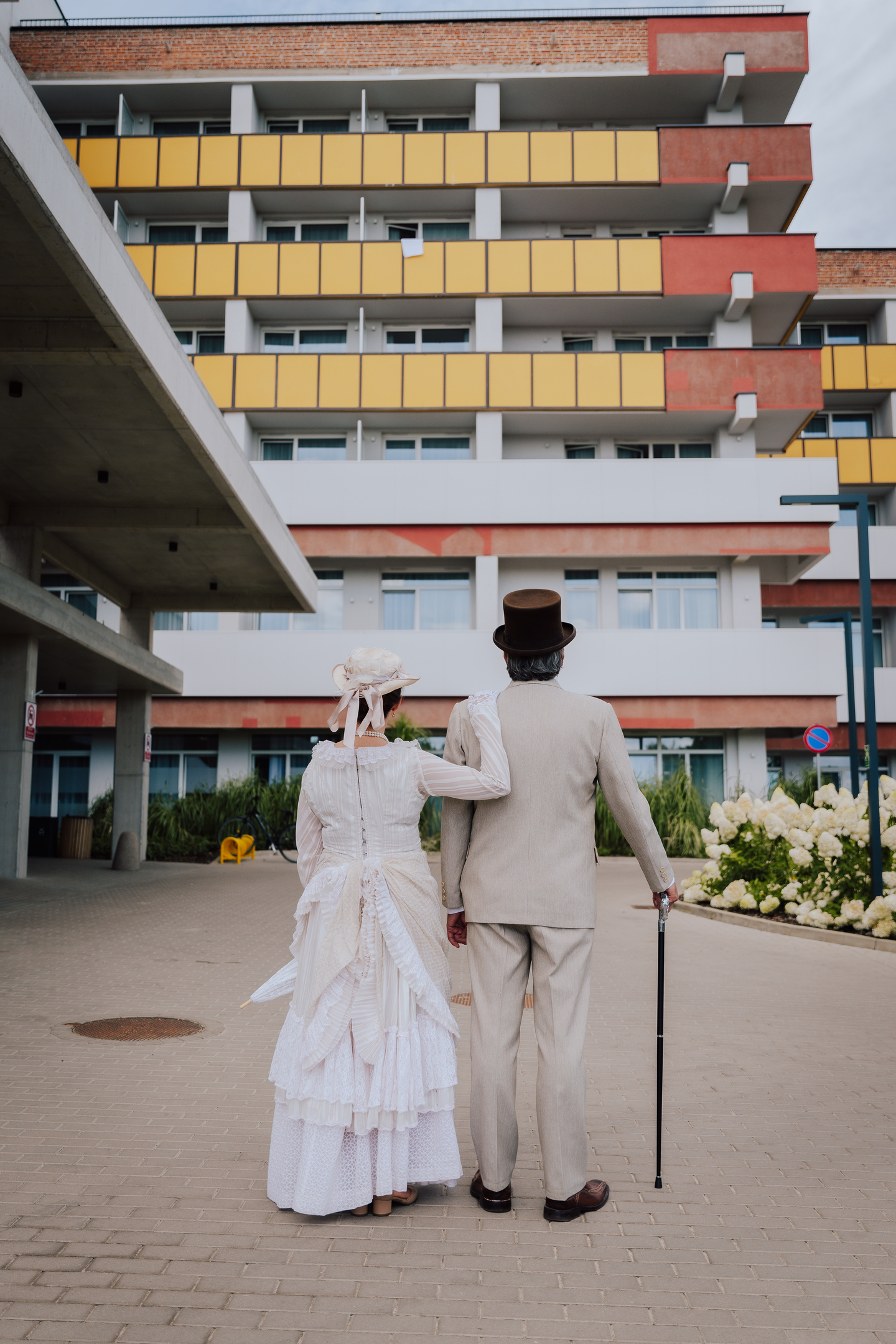
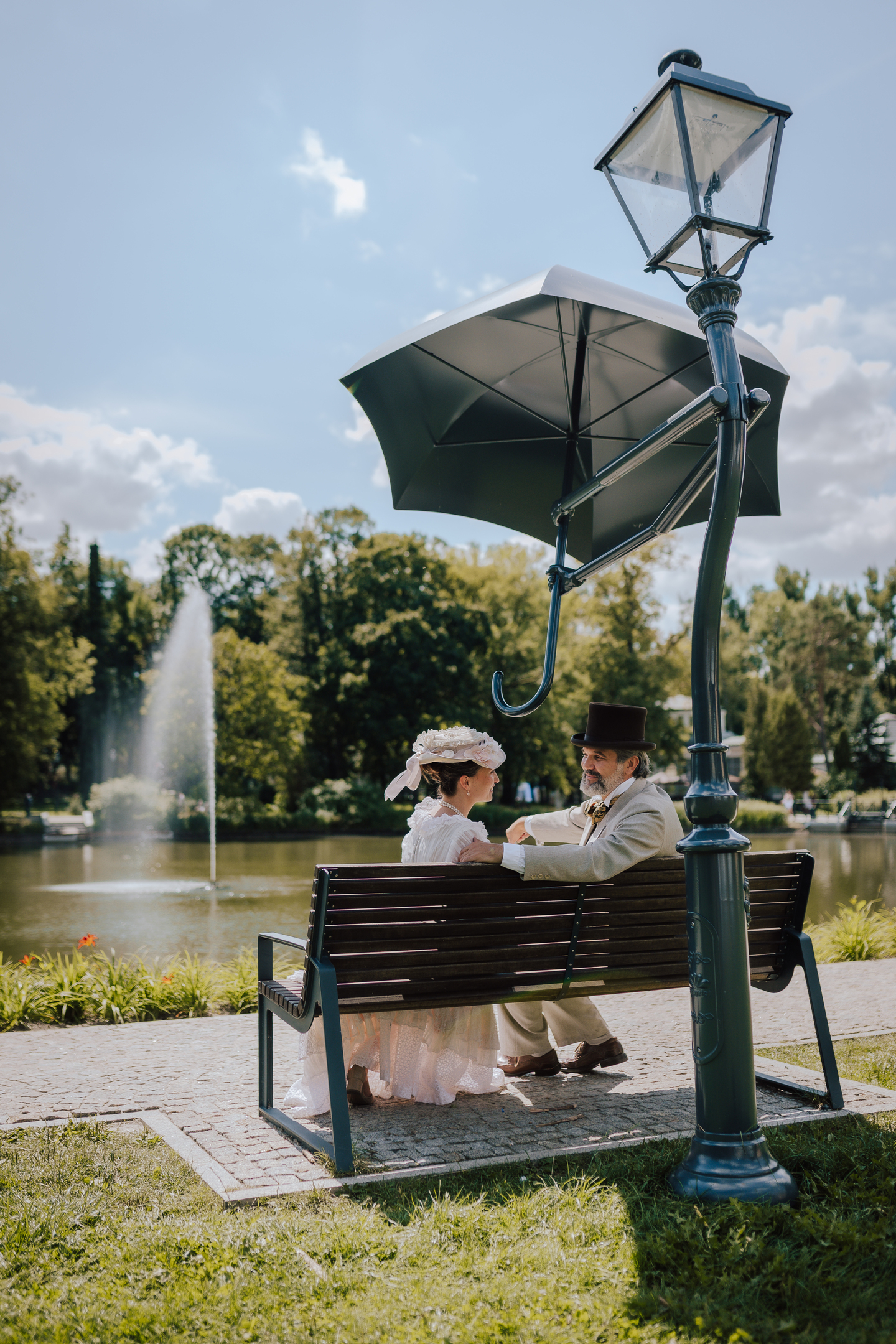
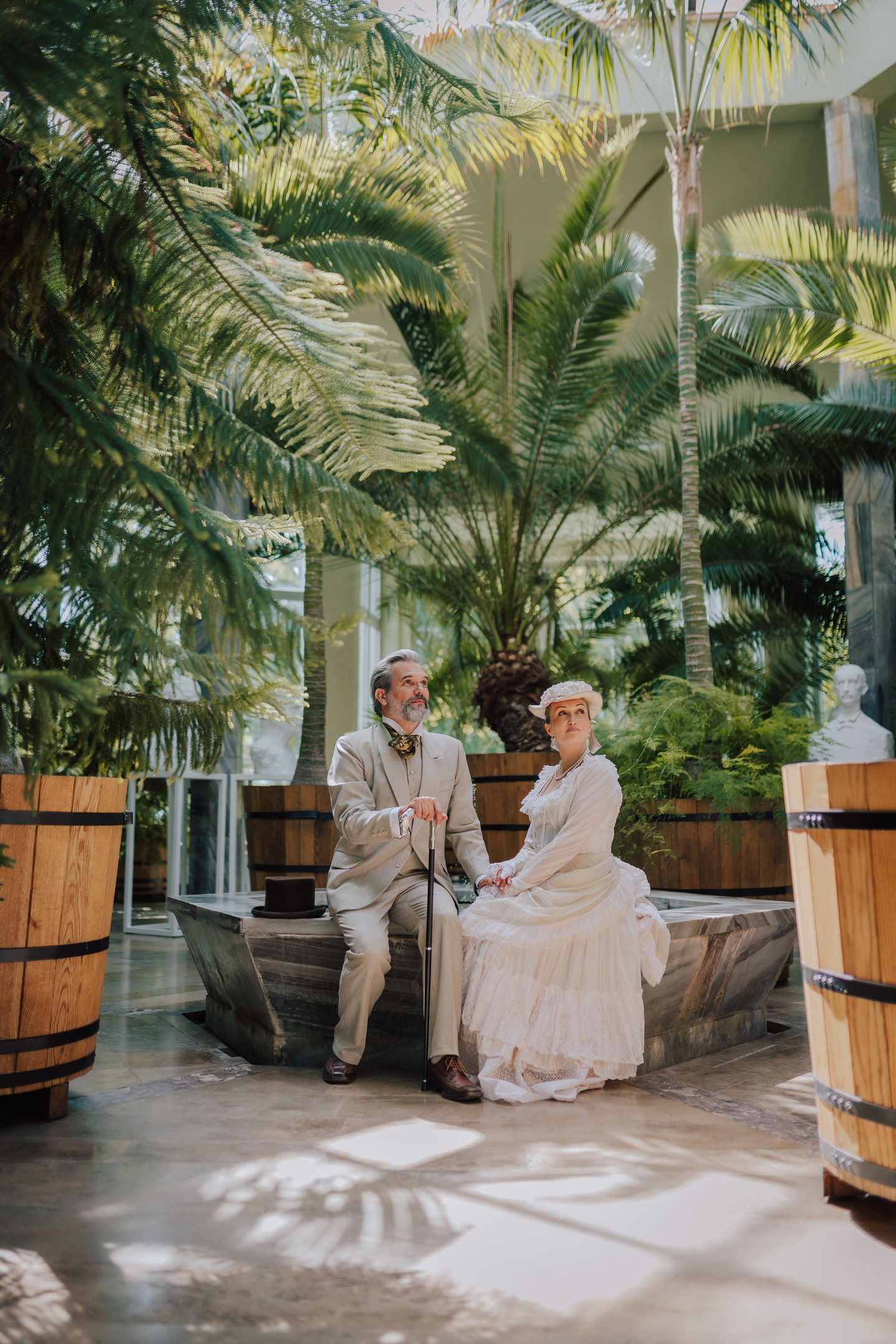
Following “The Doll” in Nałęczów—why was the novel written here?
Bolesław Prus, actually Aleksander Głowacki, first came to Nałęczów in 1882 for health reasons. He suffered from agoraphobia—the fear of open spaces—and Dr Karol Benni prescribed hydrotherapy at the spa. Prus came for a six-week treatment. He did not expect to return every summer for the next 28 seasons.
For almost three decades, until 1910, he returned to Nałęczów every year. He became the spa’s most devoted patient—and one of its most effective ambassadors. Prus lived and wrote in Małachowski Palace, in the heart of Spa Park. There he created passages of “The Doll”, “The Outpost” and his famous “Chronicles”. In a first-floor room beside the tower, and later on the north-western ground floor, the stories of Wokulski and Izabela Łęcka took shape.
“The Doll” is not set in Nałęczów, but the atmosphere in which Prus wrote it—the world of 19th-century salons, walks and conversations—can still be felt here. Walking today through Spa Park, along Lipowa Street or Armatnia Góra, you pass the same villas and architecture known to the author.
Following “The Doll” in Nałęczów—Prus beyond the textbooks
Nałęczów’s Prus is not the marble classic of schoolbooks. He remains a vivid legend: an enthusiastic cyclist and fan of new technology, chess and walks through loess gorges.
Konrad Chmielewski Jr.’s memoirs tell us Prus “bought a cheap bicycle, a bachran suit for 5 silver roubles (rs), practised mounting on the causeway behind the palace, and every few minutes flew headfirst into the bushes. No one could persuade him to choose a safer avenue.”
He was so popular in town that children called him “Grandpa Prus”. He handed out apples in the park and, through a hole in his frock-coat pocket—as the anecdote goes, “by accident”—dropped sweets for the delighted children to collect. This warm, human image of the writer is still alive in Nałęczów.
Following “The Doll” in Nałęczów—Bolesław Prus Museum
The town’s literary landmark is the Bolesław Prus Museum—Poland’s only museum dedicated to the author of “The Doll”. It is a branch of the National Museum in Lublin.
The museum is now housed in the former Adam Żeromski Nursery, designed by renowned architect Jan Koszczyc-Witkiewicz and built of limestone and brick in the Zakopane style. Interestingly, Stefan Żeromski funded the Nursery, while Prus himself helped finish it. Until 2017, the museum operated in Małachowski Palace, where the writer actually worked.
Visitors can see:
a permanent exhibition of manuscripts, letters, photographs and personal items (including an ivory knife, a 19th-century typewriter and a unique address marking his 25th creative anniversary)
facts about daily life at a 19th-century spa
educational programmes: museum lessons, workshops and events for schools and literature lovers
The museum is open Wednesday to Sunday. Check current opening hours and prices on the Lublin Museum website before visiting.
Following “The Doll” in Nałęczów—two adaptations returning in 2026
2026 is a special year for “The Doll”. For the first time, two major adaptations of the same novel will reach audiences almost simultaneously—just two weeks apart.
Netflix’s “The Doll”—Paweł Maślona’s reinterpretation
On September 16, 2026, Netflix premieres a six-part series directed by Paweł Maślona (director of “The Scar”), based on a screenplay written with Paweł Demirski and Jagoda Dutkiewicz.
This is a bold, contemporary reinterpretation of the classic. The creators abandon romantic idealisation, showing people entangled in social dependencies and driven by ambition and money. The classic plot gains a modern series rhythm, with investigations, family secrets and conflicts revealing hidden interests. Starring Tomasz Schuchardt as Wokulski and Sandra Drzymalska as Izabela Łęcka. Dariusz Chojnacki plays Ignacy Rzecki, while Magdalena Cielecka is the charismatic Kazimiera Wąsowska. Costumes are by Dorota Roqueplo.
“The Doll” in cinemas—Maciej Kawalski’s blockbuster
On September 30, 2026, two weeks after the series premiere, Maciej Kawalski’s film “The Doll” reaches cinemas—one of Poland’s most star-studded productions in recent years.
Marcin Dorociński plays Wokulski, Kamila Urzędowska is Izabela Łęcka, and Marek Kondrat plays Ignacy Rzecki, returning to the big screen after 16 years for the role. The supporting cast features Polish cinema stars: Andrzej Seweryn, Krystyna Janda, Agata Kulesza, Maja Komorowska, Borys Szyc, Maria Dębska and Dawid Ogrodnik.
The film is faithfully set in its period. Costumes by Katarzyna Lewińska and Tomasz Ossoliński, with guest participation by Gosia Baczyńska, include over 100 bespoke outfits, 20 dresses for Izabela Łęcka alone, and over 500 sets for extras. Designs drew on original fashion magazines and late-19th-century patterns. A section of old Warsaw was recreated on Krakowskie Przedmieście, including Wokulski’s shop at 1:1 scale.
Which “The Doll”—series or film?
No need to choose. Maślona’s series is a contemporary, surprising take for viewers who enjoy classic stories subverted and retold. Kawalski’s film is a lavish, faithful period adaptation with a star-studded cast.
The best plan? Watch both, then visit where the novel was truly written—and see Prus’s world for yourself.
Following “The Doll” in Nałęczów: a literary walk through Prus’s
Nałęczów is one of those places where literature truly meets history. Begin a literary walk following “The Doll” and its author in Spa Park—the heart of the resort, whose paths were once walked by spa guests.
The literary walk includes:
- Małachowski Palace the key Prus site in Nałęczów, where he lived and wrote “The Doll”. A stone plaque on the north façade commemorates this, dated 1924.
- Prus Monument designed by Alina Ślesińska (a film curiosity: the stonework was done by Jan Himilsbach, a self-taught actor and stonemason). The monument was unveiled on May 9, 1966, near Małachowski Palace, which had housed the Bolesław Prus Museum since December 3, 1961.
- Bolesław Prus Bench (now by the pond, opposite the Książę Józef Sanatorium), created by Nałęczów sculptors, father and son Stanisław and Zbigniew Strzyżyński. Unveiled on October 20, 2002, marking 120 years since the writer’s first visit to Nałęczów.
- “Under the Madonna” Villa, one of the villas where Prus stayed in 1900–1910, as recorded on a commemorative plaque on the building’s north façade.
- Bolesław Prus Museum, the literary weekend’s central stop
- Spa Park with the Mineral Water Pump Room and Avenue of Polish Cycling Stars, whose plaque commemorates Prus as a cyclist and honorary Warsaw Cycling Society member
Less a walk through the novel’s settings than its author’s world, where he could transfer its unique atmosphere to the page.
“The Doll” Weekend at Arche Nałęczów—a stay inspired by the novel
The two adaptations’ premieres are the perfect excuse to discover Nałęczów through literature. Arche Nałęczów—a hotel in the heart of the spa, just hundreds of metres from Spa Park and Małachowski Palace—is preparing a special stay package inspired by “The Doll”.
The package includes:
- a sweet welcome treat in your room—limited-edition Nałęczowska plum with “The Doll” artwork
- an illustrated edition of Bolesław Prus’s “The Doll” waiting in your room on arrival
- a Prus trail walk through Spa Park, around Małachowski Palace and sites linked to the spa’s history, using a prepared guide map
- water therapy at Nałęczów’s Mineral Water Pump Room—daily access to the Palm House and Pump Room, plus the same waters that Prus himself used for treatment here
- relaxation at Arche Nałęczów, with a Wellness area, restaurant and the atmosphere of a historic sanatorium in modern form, plus breakfast and dinner
Additionally, outside the package, you can visit the Bolesław Prus Museum (open Wednesday to Sunday), one of Nałęczów’s key literary sites.
Our feature Following Bolesław Prus’s “The Doll” in Nałęczów: package details and literary inspiration.
A proposal for lovers of literature, history, elegant interiors and atmospheric travel. Perfect for autumn 2026—when both adaptations reach screens.
Plan a literary stay at Arche Nałęczów
2026 is the perfect time to combine two things: watch the new adaptations of “The Doll” and visit the town where the novel’s episodes were written. Wokulski and Łęcka on screen—and a walk along the paths taken by their author.
Check dates and plan a literary weekend at Arche Nałęczów—where “The Doll” meets spa history.
FAQ—following “The Doll” in Nałęczów
✦ Was Bolesław Prus’s “The Doll” written in
Some chapters of “The Doll”, published in “Kurier Codzienny” from 29 September 1887 to 25 May 1889, were written at the Małachowski Palace in Nałęczów during the author’s stays at our spa. Prus visited the resort for 28 seasons, from 1882 to 1910. The novel is not set in Nałęczów, but Prus wrote parts of it there, alongside “The Outpost” and “Chronicles”.
✦ How many “The Doll” adaptations debut in 2026?
Two adaptations of “The Doll” premiere in 2026. The Netflix series, directed by Paweł Maślona (6 episodes), debuts on 16 September. Maciej Kawalski’s feature film reaches cinemas on 30 September. It is the first time two major adaptations of the same Polish novel have appeared almost simultaneously.
Who plays Wokulski and Izabela Łęcka in new “The Doll” adaptations?
In the Netflix series, Tomasz Schuchardt plays Stanisław Wokulski and Sandra Drzymalska plays Izabela Łęcka. In Maciej Kawalski’s film, Marcin Dorociński plays Wokulski and Kamila Urzędowska plays Izabela Łęcka. Both productions also feature Ignacy Rzecki—Dariusz Chojnacki plays him in the series and Marek Kondrat in the film.
✦ Where is the Bolesław Prus Museum in Nałęczów?
The Bolesław Prus Museum is currently housed in the former Adam Żeromski Ochronka building in Nałęczów (ul. Poniatowskiego 39), a few minutes’ walk from Spa Park and Arche Nałęczów. It is Poland’s only museum devoted to the author of “The Doll” and a branch of the National Museum in Lublin. Open Wednesday to Sunday (check current hours before visiting). From December 2027, the museum is to move to a pavilion by Żeromski’s Cottage, bringing it closer to “Prus”.
✦ What’s included in Arche Nałęczów’s “The Doll” literary stay?
The “The Doll”-inspired package includes: an illustrated “The Doll”; a limited-edition sweet treat—Śliwka Nałęczowska with “The Doll” graphics; Mineral Water treatments at the Mineral Water Pump Room in Nałęczów; the guide map Following Bolesław Prus in Nałęczów; an Arche Nałęczów stay with Wellness access and meals: breakfasts and half-board dinners. Details are available on the hotel website.